

Isn’t this a gr8 concept.

Chinese has added a LCD Display to the Bluetooth Vibrating Bracelet. It comes in black rubber with an LCD display that displays the number and vibration that alerts you when a call is coming in. Via: likecool.

A new research suggests excessive use of mobile phones can hinder sleep, trigger fatigue and stress and cause mental problems like depression and lack of concentration. At the recent annual meeting of the U.S. Associated Professional Sleep Societies (APSS), Dr. Gaby Badre from Sahlgren's Academy in Gothenburg, Sweden said teenagers who use their phones excessively are more prone to stress and fatigue. The study focused on 21 healthy people between 14 and 20 years of age with regular work or study hours and without sleep problems. The subjects were divided into two groups. Compared to the control group, who made less than five calls and/or sent five text messages a day, the experimental group made more than 15 calls and/or sent 15 text messages a day. And the latter suffered from increased restlessness, had more careless lifestyles, consumed more stimulating beverages, and reported difficulty falling asleep, disrupted sleep, and more susceptibility to stress and fatigue. Only one-third of them ate breakfast, compared with most in the control group.
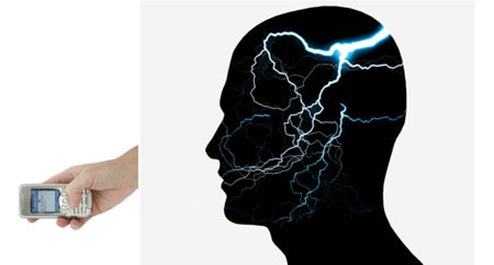
Brain wave scan of children with high mobile use showed a similar sleep cycle pattern to that of a depression patient. Conversely, depressive and impulsive children tended to rely more on mobile phones. Experts say those who are at risk to becoming an addict are nervous without a phone, always tinker with it and are at ease only after making a call or texting someone. Doctors also note that texting can be more harmful than phone calls to mental health and sleep levels. Prof. Ha ji-hyun, of the Department of Psychiatry at Konkuk University Medical Center says, "A call is simultaneous communication, but an SMS is not. You can get nervous while waiting for the response."

Seeing is believing with the Sony Ericsson C903 Cyber-shot. The slick and stylish mobile phone has a unique sliding lens cover to make great photography as easy as one, two, three.

The C903 Cyber-shot is made for taking memorable pictures – just slide down the protective lens cover and shoot! The slim slider has dedicated camera keys and an impressive five megapixel camera to create big pictures with rich details and true colours.
Packed full of features the C903 Cyber-shot will give you the best picture possible with Face Detection, finding up to three people in the frame at a time and Smile Shutter which automatically picks out beaming smiles. Snap up to nine images in quick succession using BestPi, pick your best and delete the rest.
“The C903 Cyber-shot adds a creative and stylish mobile phone to our mid-range segment.” said Daniel Sandblom Global Business Marketing Manager at Sony Ericsson. “The C903 Cyber-shot furthers Sony Ericsson’s digital camera heritage and makes capturing special images even more memorable.”
Show off your images with the crystal clear, auto rotating 2.4” display, send them to your blog or connect to your TV screen using the TV-out function and get up close and personal.
The C903 Cyber-shot also comes complete with aGPS – never lose track of where you took an image or where you are – simply tag your photos to a location or use the feature to find your way home or to the pub.
The C903 Cyber-shot
Made for taking memorable pictures
The C903 Cyber-shot supports GSM/GPRS/EDGE 850/900/1800/1900 and UMTS/HSPA 900/2100. C903 Cyber-shot will be available in selected markets from Q2 in the colours Lacquer Black, Techno White and Glamour Red.
The Sony Ericsson C903 Cyber-shot™ at a glance
Camera
5.0 megapixel camera
Up to 16x digital zoom
Photo fix
Picture blogging
Video blogging
Auto focus
Smile Shutter™
Face detection
BestPic™
Photo flash
Video recording
Image and Video stabilizer
Snapfish™
Music
Media player
Album art
PlayNow™
TrackID™
Mega Bass™
Album art
Bluetooth™ stereo (A2DP)
Music tones (MP3/AAC)
Web
Access NetFront™ Web browser
Web feeds
Photo feeds
Picasa™
Flickr™
Communication
Speakerphone
Polyphonic ringtones
Vibrating alert
Video call
Messaging
Email
Picture messaging (MMS)
Predictive text input
Sound recorder
Text messaging (SMS)
Exchange ActiveSync
Chat View (TBC)
Instant messaging
Design
Picture wallpaper
Wallpaper animation
Auto rotate
Entertainment
3D games
Motion gaming
Java
FM radio with RDS
Video streaming
Video viewing
Media
YouTube™
Walk Mate
Tracker
TV-out
Connectivity
Bluetooth™ technology
Modem
USB mass storage
USB support
Synchronization
PictBridge
Organizer
Alarm clock
Calculator
Calendar
Flight mode
Notes
Phone book
Stopwatch
Tasks
Timer
Location-based services
Geo tagging of photos
Google Maps™
aGPS
Wayfinder Navigator™ (3-month trial version)
Accessories
In-Box:
Facts and Figures 1)2)
Size: 97 x 49 x 16 mm
Weight: 96 grams
Colours:
Laquer Black
Techno White
Glamour Red
Main screen: 262,144 colour TFT, scratch-resistant
Resolution: 240 x 320 pixels
Size: 2.4 inches
Phone memory: Up to 105MB
Memory card support: Memory Stick Micro™ (M2™)
Talk time GSM/GPRS: Up to 10 hrs
Standby time GSM/GPRS: Up to 400 hrs
Availability and versions
Networks
C903:
GSM/GPRS/EDGE 850/900/1800/1900
UMTS/HSPA 900/2100
C903a:
GSM/GPRS/EDGE 850/900/1800/1900
UMTS/HSPA 850/1900/2100
Available in selected markets from Q2 2009.

It’s a real beauty of a camera phone. The Sony Ericsson CyberShot S001 features an 8.1 megapixel autofocus EXMOR CMOS sensor with LED flash, Smile Shutter and Face Recognition technology, Image Stabilization and auto exposure/white balance alongside sensitivity of up to ISO 1600.
Some other features of the CDMA/GSM slider handset include a 3.3″ OLED display with 854 x 480 resolution, Bluetooth connectivity, Integrated GPS, and 1Seg TV tuner. You can get it from KDDI in Japan in our choice of black, gold, green and pink this March.
No word on price yet, but we’re guessing it will be reasonable. It’s a real shame that those outside of Japan won’t be able to lay their hands the Sony Ericsson CyberShot S001 at retail stores.
Via: Link

Check out Chris Owens’ Edge Cellphone refines the slider concept with a transparent, low-profile glass keypad with LED backlighting; the phone itself is made with a mix of aluminium and ABS plastic.
Source: Chris Owens
| The Samsung Omnia has plenty of features and includes some interesting Samsung-developed enhancements. It does fall short when it comes to full finger input and the fact that the stylus is attached outside the body of the phone is also a little disappointing. |  |
Since the launch of the iPhone, almost every other cellphone manufacturer has been trying to duplicate Apple’s success by giving their customers a product that works or looks similar to their ‘fruity’ competitor.
The Omnia is Samsung’s take on the booming touchscreen phone market, and while it is able to pull it off, there are still a few things that I’d like to see changed.
From a design point of view, the Omnia is a sexy device with a large 3.2-inch touch-sensitive display. Its specifications are not bad either and it features a 624MHz Marvell PXA312 processor with 128MB RAM and a 256MB ROM.
Impressively, the Omnia has an 8GB or 16GB flash drive for storage, depending on the model you opt for. While you can expand the memory further using a MicroSD card, you have to unfortunately remove the battery to access the memory card slot. An external memory slot would have been preferred, but with a minimum of 8GB, we don’t foresee this to be too big an issue.
The Samsung Omnia is powered by Windows Mobile 6.1, and we were pleased to see that they had developed a slightly modified version of the user interface to make it a lot easier to navigate the phone using finger gestures.
A stylus is included in the box, but the only way to attach it to the phone is via a mini-lanyard. After the first day of use, it became irritating and we reverted back to using finger taps to use the phone.
While Samsung had made an effort to make this an easy process, the problem is still largely the operating system, which was not really designed for finger input only. Many parts of the operating system require a stylus to effectively navigate it.
While this is not Samsung’s fault, this is a trend we have spotted on all Windows Mobile devices that take on the Apple iPhone market.
Impressively, the Omnia also sports a 5-megapixel camera and LED flash. While there is no optical zoom, the image quality is still rather impressive and for candid shots, it will certainly not disappoint.
Much like other devices in this market space, the Omnia puts up a good fight when it comes to multimedia playback. Samsung has even developed its own media player for this phone.
Their software, unlike Windows Media Player, is optimised for finger input and the audio and video quality was impressive to say the least.
Over the week or so that we used this device, we continually had mixed feelings about it. It does what it claims to do effortlessly, but the ‘external’ stylus and spotty finger input capabilities on some parts of the operating system left us a little disappointed.
While Samsung users or anyone wanting a touchscreen device will be happy with what the Omnia has to offer, slightly more advanced users might shy away from this device.
Technical Specifications:
General
2G Network GSM 850 / 900 / 1800 / 1900
3G Network HSDPA 2100 HSDPA 850 / 1900 - American version
Announced 2008, June
Status Available. Released 2008, July
Size
Dimensions 112 x 56.9 x 12.5 mm
Weight 122 g
Display
Type TFT touchscreen, 256K colors (65K effective)
Size 240 x 400 pixels, 3.2 inches
- Accelerometer sensor for auto-rotate
- Optical trackpad
- Handwriting recognition
Ringtones
Type Polyphonic, MP3
Customization Download
Vibration Yes
Memory
Phonebook Practically unlimited entries and fields, Photocall
Call records Practically unlimited
Card slot microSD (TransFlash), up to 16GB (verified)
- 128 MB RAM, 256 MB ROM
- 624MHz Marvell PXA312 processor
- 8 GB/16 GB internal memory
Data
GPRS Class 12 (4+1/3+2/2+3/1+4 slots), 32 - 48 kbps
HSCSD No
EDGE Class 12
3rG HSDPA, 7.2 Mbps
WLAN Wi-Fi 802.11b/g
Bluetooth Yes, v2.0 with A2DP
Infrared port No
USB Yes, v2.0
Features
OS Microsoft Windows Mobile 6.1 Professional
Messaging SMS, EMS, MMS, Email, Instant Messaging
Browser WAP 2.0/xHTML, HTML, RSS feeds
Games Yes + Java downloadable
Colors Modern Black
Camera 5 MP, 2592х1944 pixels, autofocus, image stabiliser, video, flash; secondary videocall camera
- Built-in GPS receiver with A-GPS support
- Java MIDP 2.0
- FM Radio with RDS
- Pocket Office (Word, Excel, PowerPoint, OneNote, PDF viewer)
- MP3/AAC/AAC+/WMA/OGG/AMR player
- DivX/XviD/WMV/MP4 player
- TV Out
- Voice memo
- Built-in handsfree
Battery Standard battery, Li-Ion 1440 mAh
Stand-by Up to 500 h
Talk time Up to 5 h 50 min
Fur is murder !

I will have the leg piece plz !!! (Turkey Phone)

I hate bananas. :( but i don't mind the phone. :) (Banana Phone)

for the golden oldies...(Cell Phone Headset)
Sorry this is a non-smoking blog :)) (Cigarette Headset)

Hands up ! (Gun Phone)

Hair Dryer or Headset ???

Hand grip IPhone Charger

Can it iron my shirt also ? (Iron-Phone)

Pen Charger

No Butter Please. (Toaster Phone)

Violin Phone...
Nokia N97 is one of the most impressive mobile phones featuring a 3.5'' touchscreen display and the full QWERTY keyboard. The device has been designed so that it always knows the area of the world it is in, by using its own incorporated compass feature. The N97 delivers a storage memory of 32GB, and also disposes a memory card slot for microSD card of up to 16GB. Such recommendations invite users to store as much music and video as possible, since it also comes with the promise that it is going to run while listening to music for about 37 hours at a time and 4.5 hours of video at once. The only features remaining are the 5 Megapixel Carl Zeiss, dual LED Flash camera, the HSDPA connectivity, the GPS, Wi-Fi, USB and Bluetooth support, plus the always popular 3.5mm jack. The slider will cost somewhere around 550 Euros (about 35,000/-INR), and it will be available in Q2 2009.

Please write comments on exactly what model/version is your mobile phone.
This will help us to post more useful info/downloads/tricks for you guys.


